8 min
01Slow rhythm
Begin with stance, hands and one balance study.
How do you practise a teep at home without a coach watching? Open the study, read its four phases and the cue for each, step the model through them, then run three rounds with the bell and write down what held. Thirty-six studies in six stages cover the guard, the teep, the round kick, the knee, the elbow, the checks and the clinch, with a round timer, twelve sessions you can rewrite and three four-week progressions. Everything you save stays in this browser, on this device.
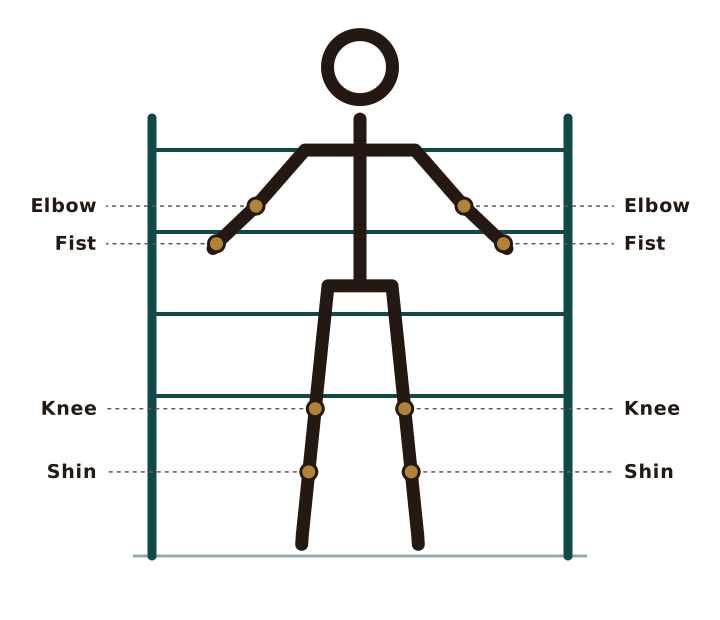
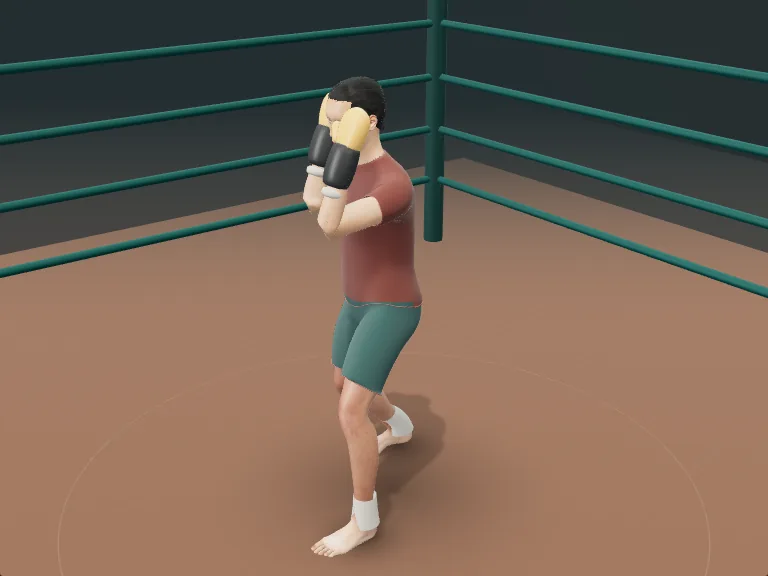
Live Guard / step back. Drag to turn the model, or open the study for phases and scrub.
Pick a length, hit start, and let the bell do the counting. It runs from this page without touching a saved session.
Round 1
3:00
Ready when you are
Thirty-six studies in the order a curriculum runs: foundations, mechanics, combinations, defence, conditioning, then the situations that need pads or a partner. Every one is a solo rehearsal; where a second figure is drawn it is an illustration of position, not a technique to copy. Read the curriculum as one page.
Stance, guard, footwork and the first shapes. Slow, small, repeatable.
One strike at a time, taken apart: the turn, the contact surface, the return.
Two or three actions in a row, and what the guard does between them.
Checks, catches, the lean and the step that buys the distance back.
Ladders and rounds for repetition once the shape is familiar.
Pads, the clinch and the moments that need a partner or a coach.
Twelve starting plans and three four-week progressions with a printable sheet. Change the work, the rest and the order, then keep your own version.
Begin with stance, hands and one balance study.
Controlled kick shapes and their return paths.
Leave room for checking, placing and moving.
What you write after a round is the part you keep. Notes stay here and export as CSV whenever you want them elsewhere.
The library includes simplified, non-contact elbow and knee movement studies. Partner contact, clinch resistance and pad impact require appropriate coaching and equipment.
The session player and movement studies can mirror their diagrams. Written cues use lead and rear language, so you can apply the stance you train.
No. This product organizes practice. Check the rules and age or experience restrictions of the organization running your event with your coach.